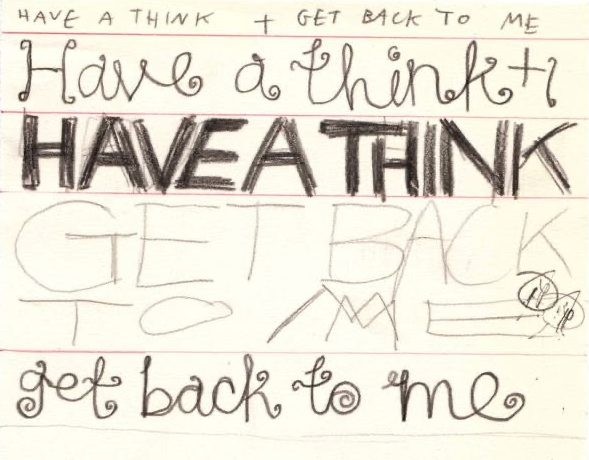
A working list of my favorite books. I read a lot & I am very easily pleased so this was hard to narrow down.
These are in no particular order ₍^. .^₎⟆
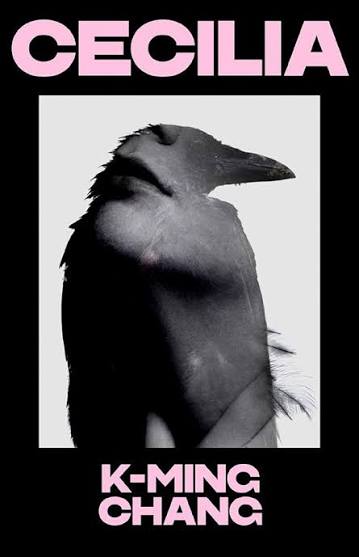
Cecilia ★ ★ ★ ★ ☆
I want to preface this by saying how much I love weird books. And not just quirky weird, but books that are genuinely unsettling, raw, and almost humanly disgusting. Cecilia is exactly that. It's a novel that blurs the line between beauty and disgust, myth and memory, tenderness and violence, until they all begin to feel like different expressions of the same thing. K-Ming Chang writes with an almost feral intimacy, filling every page with imagery that is grotesque and graphic enough to make you wince. Yet somehow, against all odds, it's also one of the most beautiful books I've ever read. Her sentences are lush and lyrical, transforming blood, rot, hunger, and decay into something strangely tender. It's the kind of writing that makes you recoil and lean in closer at the same time. Reminding you that when it comes to love, beauty and ugliness have never been as far apart as we'd like to believe.
An excerpt: “My name lives only in your mouth. It isn’t acclimated to any other conditions, doesn’t dabble in any other dark. Your tongue basks in the right acidity. Your bacteria cultivate my climate. Your teeth gnash the syllables of my name into silt. Your cheeks pouch with my excrement. In return, my mouth pits the moon and spits its seed onto your face: it lives there today as the mole under your left eye. That eye has a habit of wandering. Sometimes it ferments in the dish of beer where hundreds of slugs undrape. Sometimes I find it’s a fly, forever tethered to your lower lip. It startles when you speak and flees to me, touching down on my tongue and feasting on its meat. I wonder what it sees at the threshold of my hunger.”
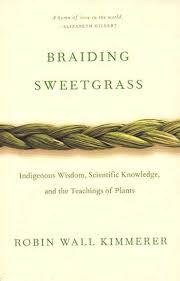
Braiding Sweetgrass ★ ★ ★ ★ ★
I don't think it's an exaggeration to say that Braiding Sweetgrass changed the trajectory of my life. Robin Wall Kimmerer writes as both a botanist and a member of the Citizen Potawatomi Nation, refusing to see science and Indigenous knowledge as opposing ways of understanding the world. Instead, she braids them together into something that feels both deeply intellectual and deeply spiritual. Every essay asks the same quiet question: what would happen if we stopped treating the Earth as property and started treating it as family? It's one of those rare books that doesn't just teach you something new, it fundamentally changes the way you notice. Ever since reading it, I've found myself paying closer attention to the lives of trees, moss, birds, and even the weeds growing through sidewalk cracks. It reminded me that gratitude isn't just a feeling, it's a practice. And that paying attention might be one of the most loving things we can do.
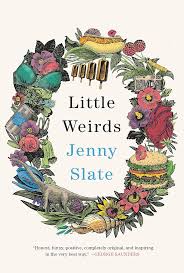
Little Weirds ★ ★ ★ ★ ☆
Jenny Slate has one of those minds that makes you wonder how anyone could possibly think the way she does. Little Weirds isn't interested in telling a linear story or arriving at neat conclusions. Instead, it wanders through essays, lists, dreams, conversations, and surreal little fragments that somehow accumulate into something profoundly human. It's wildly funny, embarrassingly vulnerable, and often so sincere it catches you off guard. Jenny has this remarkable ability to take an ordinary feeling, a crush, loneliness, joy, insecurity, and stretch it into something delightfully absurd without ever losing sight of its emotional truth. Reading this book feels like being invited inside someone else's imagination and discovering it has all the same strange corners as your own.
An excerpt: “I was born as a breakfast pastry in the fancy part of France and hours after I was born I was still warm from the heat of the oven. I knew that my warmth and lovely shape were the result of thoughtful and gentle work. Oh please feel it: I am the croissant that felt its own heat and curves and wished to become a woman, and I am that woman from the wish. Let me be your morning treat with your coffee. Disregard the fear that I am too rich to be an ordinary meal. Allow my antique decadence into your morning into your mouth. Pair me with jam. Treasure me for my layers and layers of fragility and richness. Name me after a shape that the moon makes. Have me in a hotel while you are on vacation. Look at me and say, “Oh, I really shouldn’t,” just because you want to have me so very much."
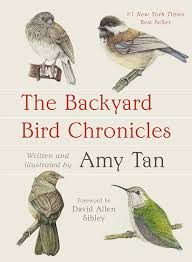
The Backyard Bird Chronicles ★ ★ ★ ★ ☆
I love books that remind me how much life exists beyond the center of my own attention, and The Backyard Bird Chronicles does it beautifully. This is one of those books that quietly sneaks up on you. I picked it up because I love birds, but somewhere along the way I realized Amy Tan wasn't really teaching me about birds, she was teaching me how to notice them. She writes about the ones visiting her backyard with so much affection and curiosity that they stop feeling like wildlife and start feeling like neighbors. Every bird has a personality, every sketch feels like it was drawn out of genuine admiration, and every journal entry made me want to spend a little more time looking out my own window. It's such a warm, unassuming book, the kind that reminds you the natural world doesn't have to be spectacular to be endlessly fascinating. You just have to be willing to pay attention. Which I think is the most important rule when it comes to birdwatching
Devotions ★ ★ ★ ★ ★
Devotions isn't a collection I read from beginning to end, it's one I return to whenever I need to remember why the world is worth paying attention to. Mary Oliver writes with a reverence that never feels performative or distant. Her poems are full of geese, rivers, dogs, grasshoppers, forests, and quiet mornings, but they are never really about those things alone. They're about learning how to inhabit your own life with greater presence and curiosity. She has this extraordinary ability to find the sacred in the ordinary without asking you to believe in anything other than the miracle of being alive. Every time I open this book, I leave feeling just a little more awake than I was before.
An excerpt: "Softest of mornings, hello. And what will you do today, I wonder, to my heart? And how much honey can the heart stand, I wonder, before it must break? This is trivial, or nothing: a snail climbing a trellis of leaves and the blue trumpets of flowers. No doubt clocks are ticking loudly all over the world. I don’t hear them. The snail’s pale horns extend and wave this way and that as her fingers-body shuffles forward, leaving behind the silvery path of her slime. Oh, softest of mornings, how shall I break this? How shall I move away from the snail, and the flowers? How shall I go on, with my introspective and ambitious life?"
Between The World And Me ★ ★ ★ ★ ★
There are books that inform you, books that move you, and then there are books that demand something from you. Between the World and Me is one of those books that demand something from you. Written as a letter from Ta-Nehisi Coates to his teenage son, it examines race, history, violence, fear, and love with a clarity that refuses simplification. Coates doesn't offer easy optimism or comforting answers. Instead, he insists on looking directly at the realities of inhabiting a Black body in America, asking what it means to love someone in a world that has so often failed to protect them. His writing is urgent, elegant, and uncompromising. It's the kind of book that doesn't leave you feeling inspired so much as more honest.
In Other Words ★ ★ ★ ★ ☆
I've always been fascinated by people who, similarly to me, willingly make things harder for themselves. This book completely changed the way I think about language. I picked it up expecting to read about someone learning Italian, but what I found was a woman willingly giving up the thing she was best at. Jhumpa Lahiri had already built an incredible career writing in English, yet she chose to start over in a language where she couldn't express herself the way she wanted to. That's what fascinated me. She never pretends it's beautiful all the time. Most of the book is spent sitting with the discomfort of not having the right words, of feeling smaller than your own thoughts, of knowing exactly what you want to say but not yet knowing how to say it. It's incredibly introspective, but never self-indulgent. More than anything, it's about what we're willing to sacrifice in order to become the people we're curious about.
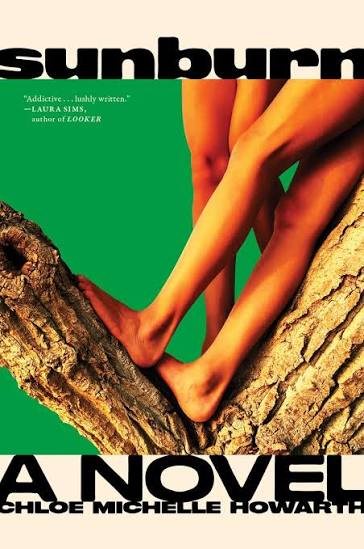
Sunburn ★ ★ ★ ★ ★
I've never rooted for a character while simultaneously wanting to shake some sense into them the way I did with Lucy. That's what I loved so much about Sunburn. Chloe Michelle Howarth doesn't seem interested in writing a "good" protagonist, she's interested in writing an honest one. Lucy is messy, selfish, contradictory, and so desperate to be loved that she spends most of the novel becoming whatever everyone else needs her to be. Her relationship with Martin feels less like true romantic love and more like an obligation, the life she's always been told she's supposed to want. Then Susannah enters the picture, and suddenly there's this quiet possibility of another version of herself, one that's both exhilarating and terrifying. What makes the novel so heartbreaking is that Lucy isn't just fighting against her family or her town, she's fighting against the version of herself she's spent years constructing for other people. Every decision she makes feels frustratingly human because you understand exactly why she's making it, even when you wish she wouldn't.
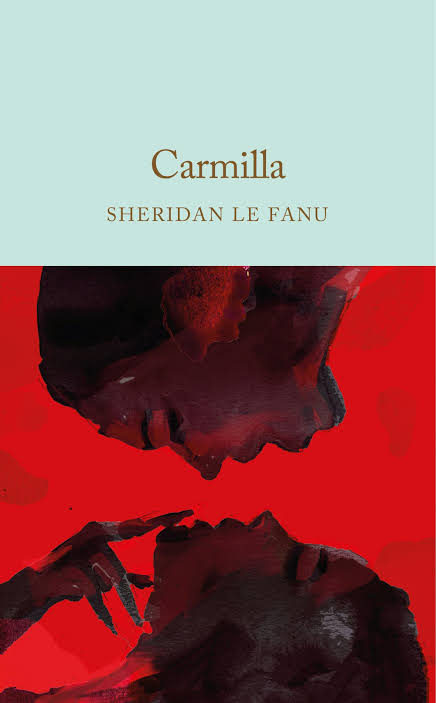
Carmilla ★ ★ ★ ★ ☆
I think Carmilla gets reduced to "the lesbian vampire book that came before Dracula" way too often, when it's so much stranger than that. What I loved most was Carmilla herself. She's charming, possessive, unsettling, and almost impossible to pin down. She remains elusive almost until the end. She's not a villain with a tragic backstory or a hero in disguise. She exists as a kind of force: seductive, lonely, predatory, affectionate, impossible to categorize. That ambiguity is what makes her feel so alive, even a century and a half later. Sheridan Le Fanu builds this incredible atmosphere where desire always arrives hand in hand with danger, making the whole novel feel hazy and dreamlike. It never relies on jump scares or graphic horror. For a book published in 1872, it feels surprisingly modern in the way it treats longing, not as something pure or romantic, but as something obsessive, consuming, and a little frightening. If you’re trying to get into gothic novels…this is the perfect place to start.

Erosion: Essays of Undoing ★ ★ ★ ★ ★
Some essay collections try to provide answers. Erosion: Essays of Undoing is far more interested in asking what happens after everything you thought was stable begins to fall away. Terry Tempest Williams moves effortlessly between memoir, environmental writing, politics, grief, and spirituality, refusing to separate the personal from the ecological. She writes about erosion as both a geological process and an emotional one, reminding us that landscapes and people are shaped by the same forces of loss and transformation. It's a book that doesn't shy away from uncertainty or heartbreak, choosing instead to sit beside them long enough to understand what they're trying to teach us. Every time I read Williams, I'm reminded that some of the most meaningful forms of hope are the quiet ones.

What Is Not Yours Is Not Yours ★ ★ ★ ★ ★
I don't think anyone writes fairy tales quite like Helen Oyeyemi. What Is Not Yours Is Not Yours is a collection of interconnected stories where keys appear without locks, puppets seem almost alive, libraries become labyrinths, and reality is always just a little stranger than you expect it to be. Her stories operate on dream logic, asking you to surrender the need for clear explanations in favor of curiosity. Every piece feels like a puzzle that's less interested in being solved than experienced. Oyeyemi has this remarkable ability to make the impossible feel emotionally true, and by the end you're left with the strange feeling that you've remembered a dream instead of finished a book.

Running In The Family ★ ★ ★ ★ ★
I think every family has two histories: the one everyone agrees happened, and the one that survives in half-remembered stories, exaggerations, and whispered conversations. Running in the Family lives somewhere between those two versions. Michael Ondaatje writes about memory as though it's something soft around the edges, allowing myth, gossip, poetry, and fact to blur together until they become impossible to separate. His prose feels humid and intoxicating, lingering on lush landscapes, eccentric relatives, and the peculiar weight of inheritance. Reading it is like listening to someone tell you a family story late at night, each retelling slightly different, each one somehow becoming more true.
An excerpt: "If I were a cinnamon peeler I would ride your bed and leave the yellow bark dust on your pillow. Your breasts and shoulders would reek you could never walk through markets without the profession of my fingers floating over you. The blind would stumble certain of whom they approached though you might bathe under rain gutters, monsoon. Here on the upper thigh at this smooth pasture neighbor to your hair or the crease that cuts your back. This ankle. You will be known among strangers as the cinnamon peeler’s wife. I could hardly glance at you before marriage never touch you — your keen nosed mother, your rough brothers. I buried my hands in saffron, disguised them over smoking tar, helped the honey gatherers. When we swam once I touched you in water and our bodies remained free, you could hold me and be blind of smell. You climbed the bank and said this is how you touch other women, the grasscutter’s wife, the lime burner’s daughter. And you searched your arms for the missing perfume. And knew what good is it to be the lime burner’s daughter left with no trace, as if not spoken to in an act of love, as if wounded without the pleasure of scar. You touched your belly to my hands in the dry air and said I am the cinnamon peeler’s wife. Smell me."

Helen Of Nowhere ★ ★ ★ ★ ★
I have a soft spot for books that understand solitude isn't always peaceful. Sometimes it's restless, obsessive, and a little lonely. Helen of Nowhere follows a woman trying to build a quieter life in rural Vermont, but the novel is less interested in escape than it is in the uneasy relationship between the natural world and the human one. Makenna Goodman writes forests, gardens, and changing seasons with remarkable attentiveness, never romanticizing nature into a cure-all. Instead, the landscape seems to breathe alongside the narrator, amplifying every uncertainty rather than silencing it. The whole novel carries this beautiful tension between stillness and longing, making even its quietest moments feel charged with possibility.
“Helen could see through those honest people right away, just by the way they glanced at their reflections in the window behind her when they talked. The moment she would catch someone do this Helen would give up on them. This might make her sound like a pretty intolerant person, but isn’t it the other way around? Yes, they were intolerable. And Helen refused to abide by their fake humility. She preferred outright liars over the false-caring people. She’d rather spend time talking to a horrible person who was up front with their horribleness than someone trying their best to pretend they had nothing nasty lurking underneath. You know what I mean . . .She believed she was no worse and no better than most people and that we’re all equally exceptional and equally doomed. But Helen had an optimistic view of the world. And you can tell as much by the house, by its energy. Because even though she feared the world’s collapse, she also had faith in the systems of nature to rebound.”

Mountains Of The Mind ★ ★ ★ ★ ☆
I've always admired writers who can make curiosity feel contagious, and Robert Macfarlane is one of the very best. Mountains of the Mind begins with mountains, but quickly becomes something much stranger, a meditation on awe, obsession, fear, ambition, and the peculiar human desire to climb toward things that have no interest in us at all. Macfarlane moves effortlessly between history, literature, geology, and mountaineering, writing with the kind of precision that somehow never loses its sense of wonder. There's an expansiveness to this book that mirrors its subject, reminding you that mountains have always existed as more than landscapes. They've long been places where people project their fears, their fantasies, and impossible ambitions.